Reyfi originates from the old nordic languages and defines the wool of a sheep, the fleece or sheepskin.
Wool is a niche product with low demand in today's world. In particular, the use of locally produced wool, which has a coarser texture, is hardly in demand anymore. Yet, wool is a fabulous, sustainable natural material full of surprises and with a wide range of applications. Its use as a fleece offers the comfort of a beautiful sheepskin without chemical treatment or harm to the animals.
Coming up
During market season, all fleeces are reserved for the markets. Feel free to ask if you’re interested, though!
NEXT:
04. – 07.06.26
ANNO 1280
Rittergut Kruse in Gütersloh-Isselhorst
10.-11-10.2025
Mittelalterlicher Wollmarkt
Burg Beeskow
29.10. – 01.11.26
ANNO Halloween/Samhein
Delbrück
Feel free to check out our social media to see the latest on where you can find us in person!
Offers
Feel free to contact us by email if you have specific requests. We can accept orders within a limited scope!
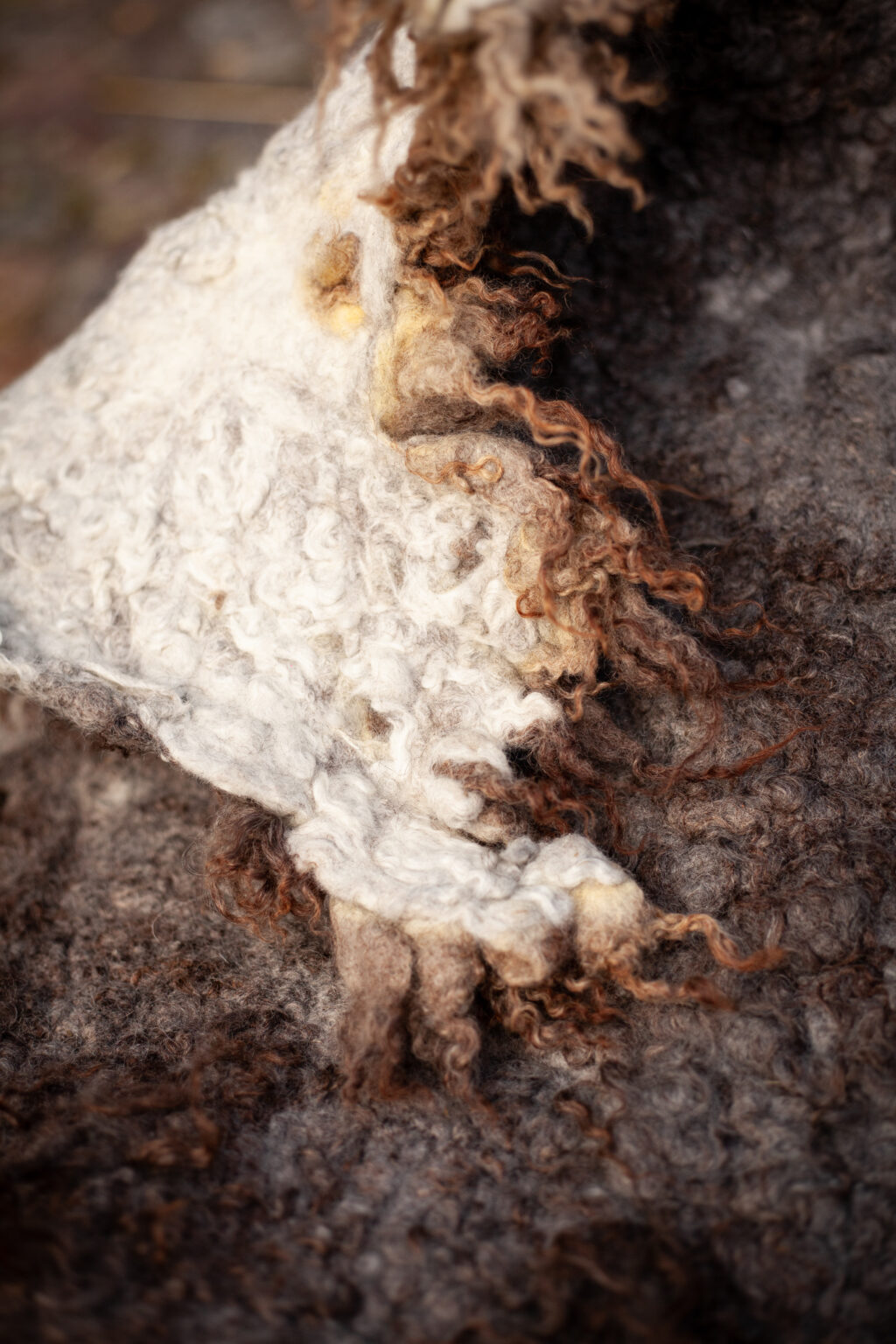
“Veggie” fleeces are leather-free on the underside. During the felting process, a cohesive layer forms that holds the fibers together. The top side remains fluffy, and no sheep were harmed.
The Process
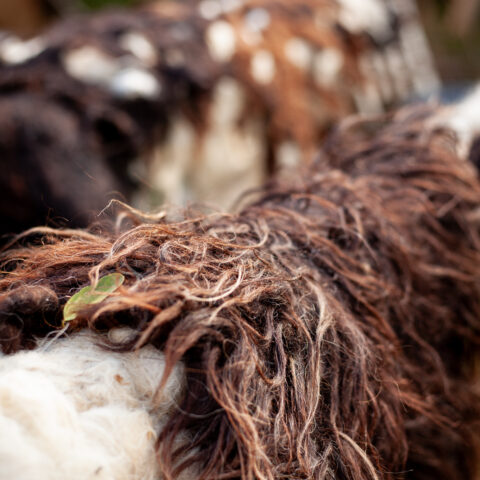
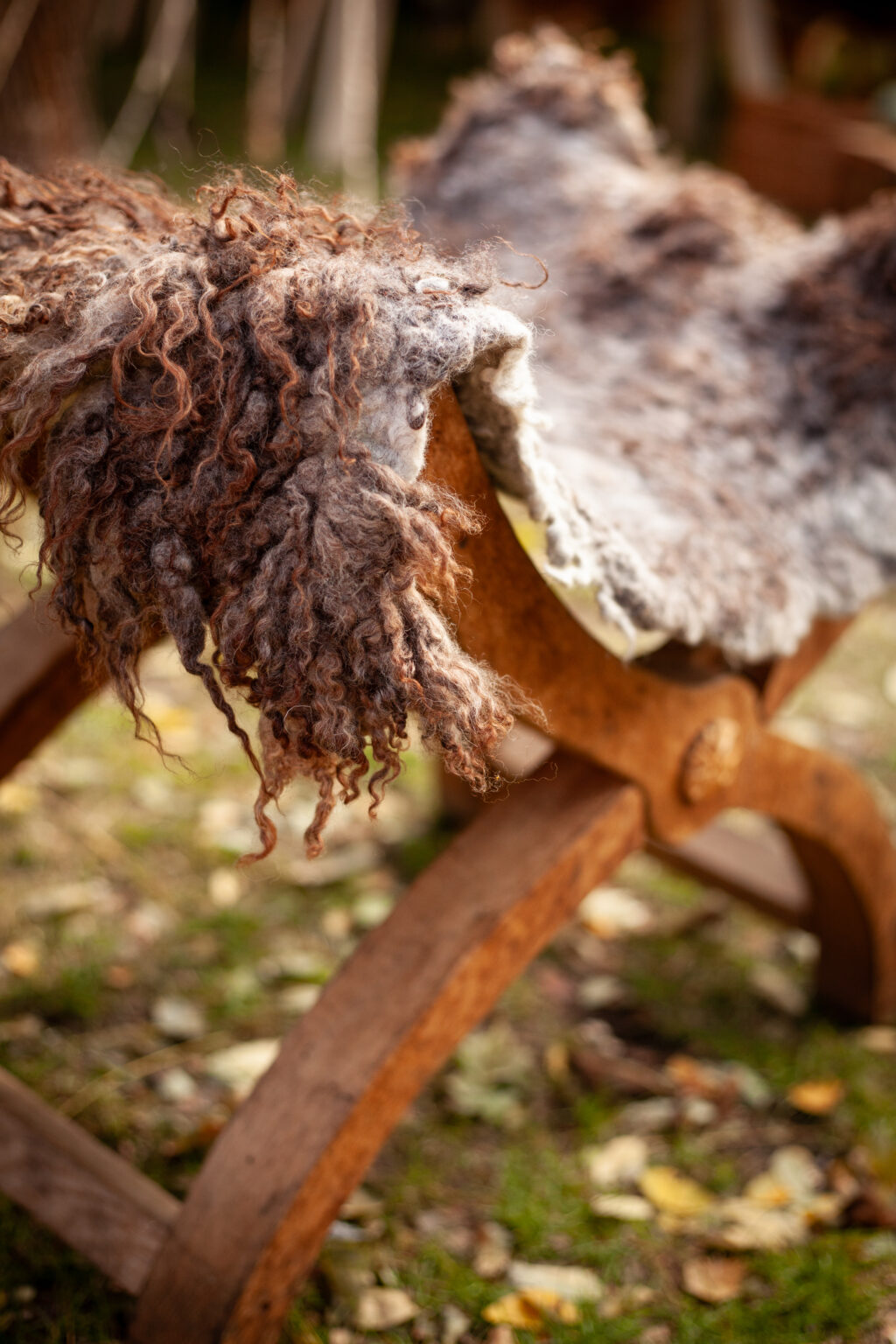
In our process the wool is carefully removed from the sheep in one piece by an experienced hand. The resulting fleece is then left raw and gently felted on one side using natural soap and a wet felting technique. The goal is to preserve the fleece as intact as possible. Instead of leather, the fibers are held together through the felting process by the wool itself. This creates a fleece without leather and without harming the sheep.
Each fleece is therefore unique. Colors and shapes vary individually depending on the sheep! The felted fleeces have a special texture because they are completely untreated. Depending on the felting process, they can be denser or thinner, which reflects the characteristics of the fleece. It’s also normal for them to occasionally shed a few hairs, have slightly felted spots, or show small gaps. In addition, there may still be tiny bits of straw or grass in the wool — after all, these are real natural products!
The Sheep
We obtain the fleeces from our own sheep as well as from nearby small farms and hobby breeders.
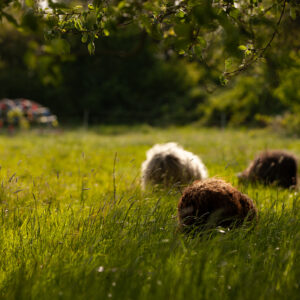
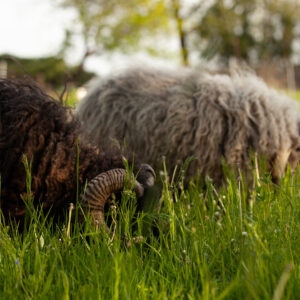
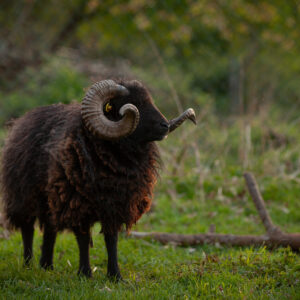
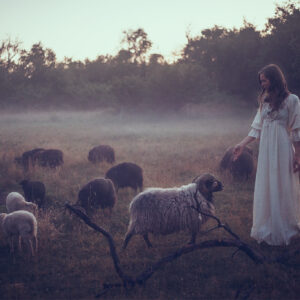
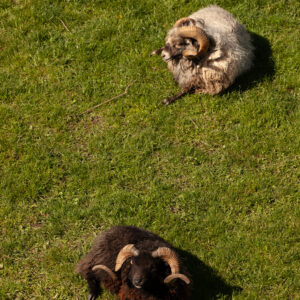
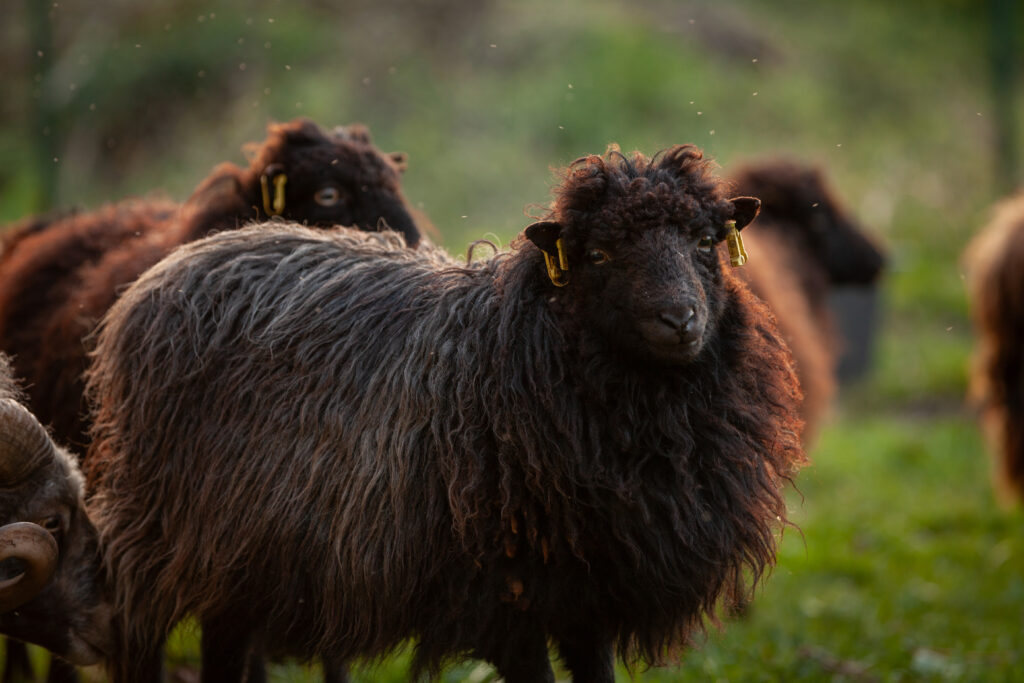
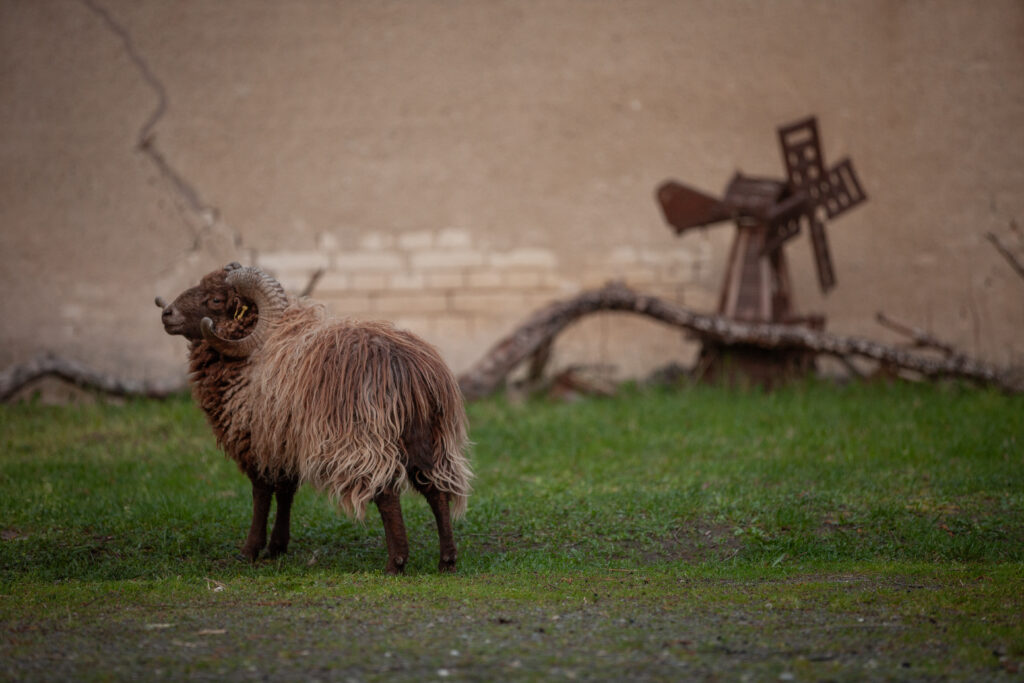
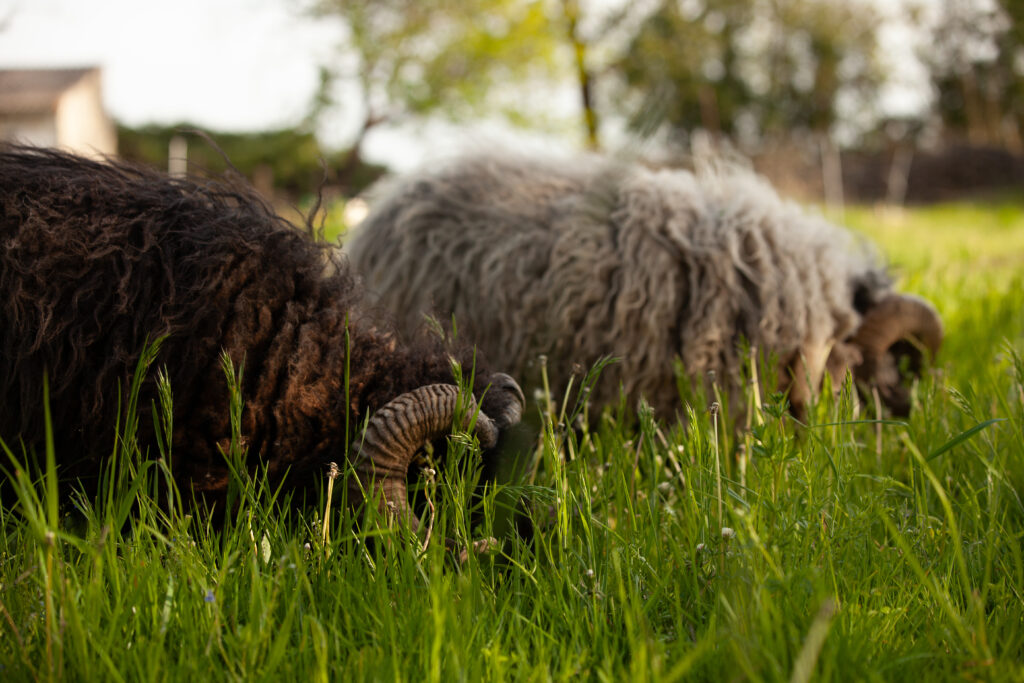
Our small herd consists of Ouessant sheep, a Breton dwarf breed that is the smallest breed in the world. Ouessants, as well as the similarly small Skudde sheep, are even listed as endangered breeds on the Red List. Therefore, we are happy to support local sheep farmers to promote the proper care and preservation of these original, hardy breeds.
Care instructions
To maintain its fluffiness, it’s recommended to gently loosen the fleece with your fingers — but please do not comb it! For regular cleaning, simply shake or beat the fleece to remove dust. If necessary, it can be rinsed by hand with wool detergent or machine-washed on a wool cycle at up to 40 °C (104 °F). To protect it during washing, place the fleece in a laundry bag or pillowcase. When not in use, it’s best to store the fleece with a small lavender sachet to help keep moths away.